OUR BLOG Ideas, Insights & Branding Inspiration
Discover ideas, practical advice and behind-the-scenes insight on branded merchandise, product design and web design for UK businesses.

Discover ideas, practical advice and behind-the-scenes insight on branded merchandise, product design and web design for UK businesses.

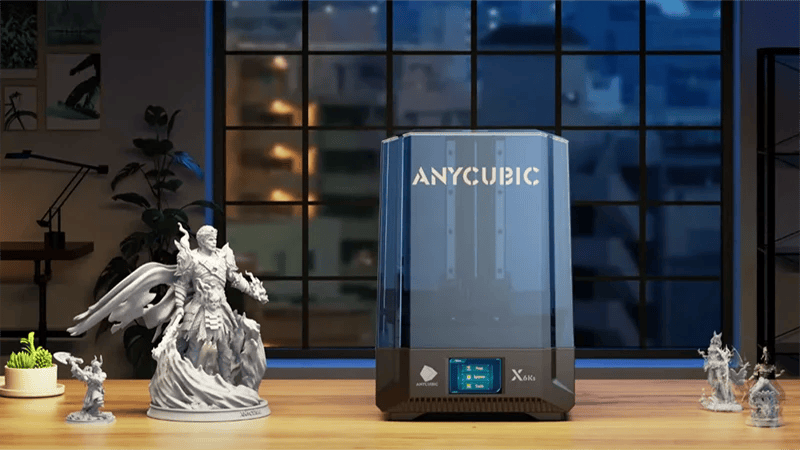
Photo by Any Cubic
Resin 3D printing has become much cheaper than almost any other 3D printing method.
Today, you can buy a high-quality desktop resin printer for well under £1,000. Modern machines often come with 7K, 12K, or even higher resolution screens. Their build sizes are also getting close to those of normal desktop FDM printers.
For example, the Anycubic Photon Mono M7 Max costs about £699 in the UK. It offers a 298 × 164 × 300 mm build volume and a stated XY resolution of 46 μm. Smaller machines can do even finer detail. The Elegoo Saturn 4 Ultra uses a 12K LCD and gives an XY resolution of about 19 × 24 μm.
That level of access would have been almost unthinkable when industrial stereolithography was the main type of resin printing.
Go back to 2008 and a machine such as the 3D Systems iPro 8000 SLA Center represented serious industrial capital equipment.
Launched in October 2008, it offered a 650 × 750 × 550 mm build envelope, an ultraviolet laser scanning system and layer thicknesses down to roughly 50 μm.
A recent listing for a used unit notes the previous customer paid about £250,000 when new, though prices varied with configuration and extras.
Less than two decades later, an MSLA printer with extremely fine feature reproduction sits on a home workbench for several hundred pounds.
That is an extraordinary transition, but there is an important distinction to make.
A modern MSLA printer is not always more accurate than an iPro just because its LCD is labelled 12K or 14K.
Industrial SLA uses a laser that scans across the resin surface. MSLA (Masked Stereolithography) exposes a whole layer at once through an LCD mask using a UV light source.
The pixel pitch of modern LCD panels can give very fine XY detail, especially on small parts. But industrial SLA systems were built for much more than just resolution. They focused on dimensional repeatability, optical calibration, thermal stability, build consistency, large-part accuracy, and controlled material processing.
In short, a £500 printer has not simply replaced a £250,000 industrial machine.
Still, the gap in visible print quality has become very small.
And that raises another, perhaps more important, question.
What About the Resin?
When people compare desktop resin printers with industrial SLA systems, the conversation normally focuses on the machine.
But the more interesting comparison is often the material inside it.
Is a £25 bottle of desktop UV resin fundamentally different from the photopolymer used inside a large industrial SLA machine?
The answer is not a straightforward yes or no.
At the cheapest end of the consumer market, you can see big differences in consistency, mechanical performance, batch control and documentation.
Industrial additive manufacturing materials may also offer properties that cheap hobby materials do not try to match. These include higher heat resistance, long-term environmental stability, controlled optical properties, casting performance, flame resistance, specialist chemical resistance or validated biocompatibility.
There is also much more behind an industrial material than its tensile-strength number. Material qualification, batch traceability, machine parameters, controlled post-curing and documented test methods can be just as important as the chemistry itself.
But something interesting has happened in the middle of the market.
Modern desktop photopolymers are not simply brittle modelling resins anymore.
Tough, ABS-like, flexible, high-temperature, castable and engineering-oriented resins are widely available for LCD printers.
And some of their published mechanical properties now overlap with materials historically associated with industrial SLA.
For example, 3D Systems says its Accura ClearVue resin reaches about 46–53 MPa tensile strength after curing on its large SLA machines. Cheap desktop resins can be similar. Anycubic lists about 40–50 MPa for its Standard Resin and 38–45 MPa for its ABS-Like Resin 3.0.
That does not mean the materials are the same or can be swapped freely.
Tensile strength is just one measure. Other traits can differ, such as stiffness, stretch, impact resistance, heat tolerance, UV ageing, creep, moisture uptake, dimensional stability, and long-term durability.
But it does demonstrate something important:
High-performance UV photopolymer chemistry is no longer confined to industrial additive-manufacturing facilities.
That is excellent news for designers, engineers and makers.
It is also where the conversation about desktop resin printing needs to become more serious.
Industrial Chemistry Has Entered the Home
The same development that makes modern resin printing so exciting creates its biggest problem.
These are still reactive photopolymer chemicals.
Putting the resin into a smaller bottle and selling the printer as a consumer product does not turn the chemistry into the equivalent of an FDM filament.
Uncured vat-photopolymer resins can contain acrylates, methacrylates, photoinitiators and other reactive compounds. Exposure can occur while pouring resin, removing prints, handling contaminated tools, washing parts, cleaning spills and dealing with uncured support material.
NIOSH's current guidance for desktop vat-photopolymerisation specifically notes that printing, washing and UV curing can produce particles and gases, and recommends exposure controls including ventilation and appropriate PPE. It also warns about skin exposure to uncured resin and the solvents used during post-processing.
This is something that industrial additive-manufacturing facilities have historically taken extremely seriously.
Yet the same material technology is increasingly being operated inside spare bedrooms, home offices and garages.
That is where the disconnect exists.
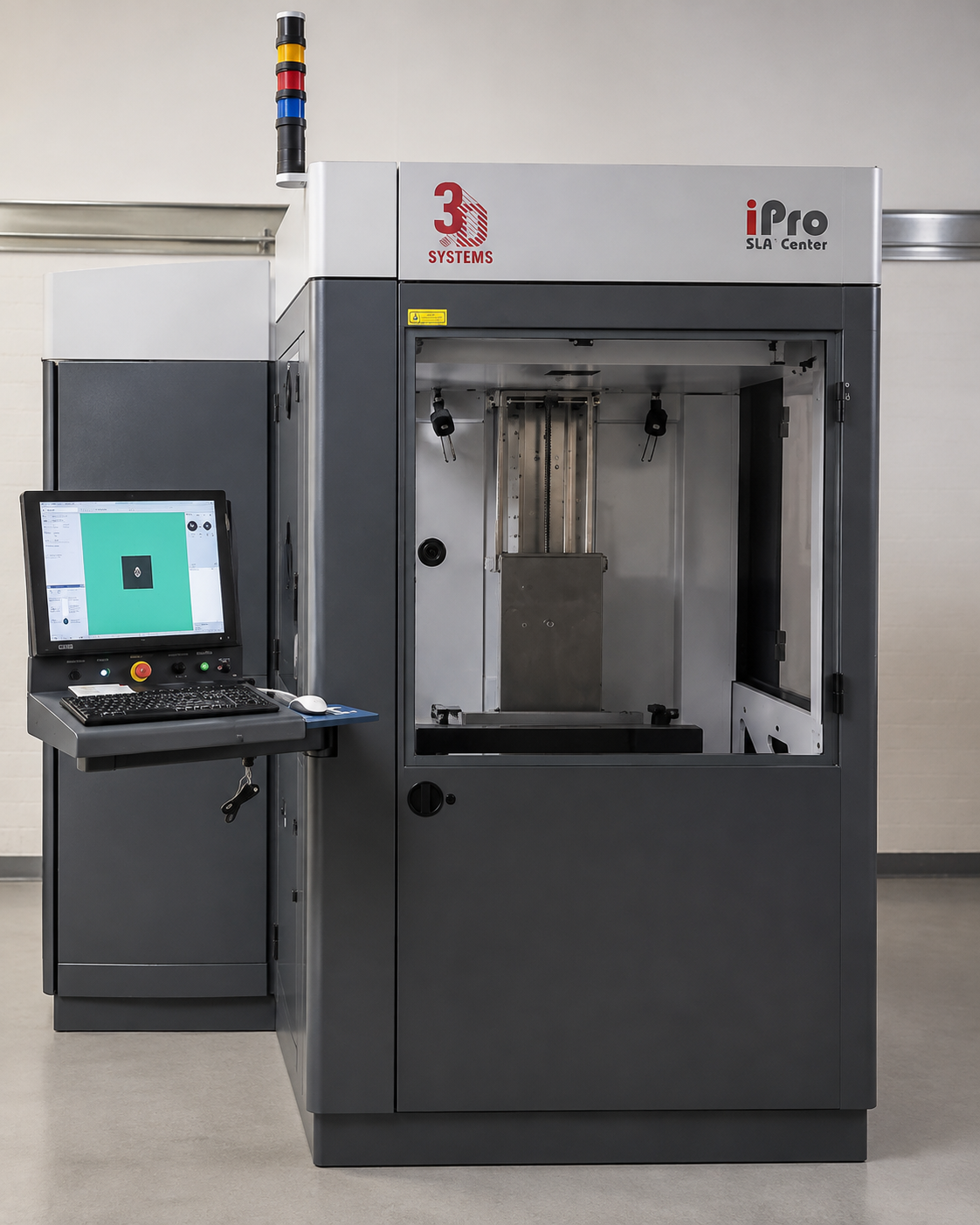
In an industrial environment, resin handling normally forms part of a wider occupational-safety system.
There may be dedicated resin areas, local exhaust ventilation, controlled wash stations, chemical storage, spill procedures, safety data sheets, training, waste-management procedures and specified PPE.
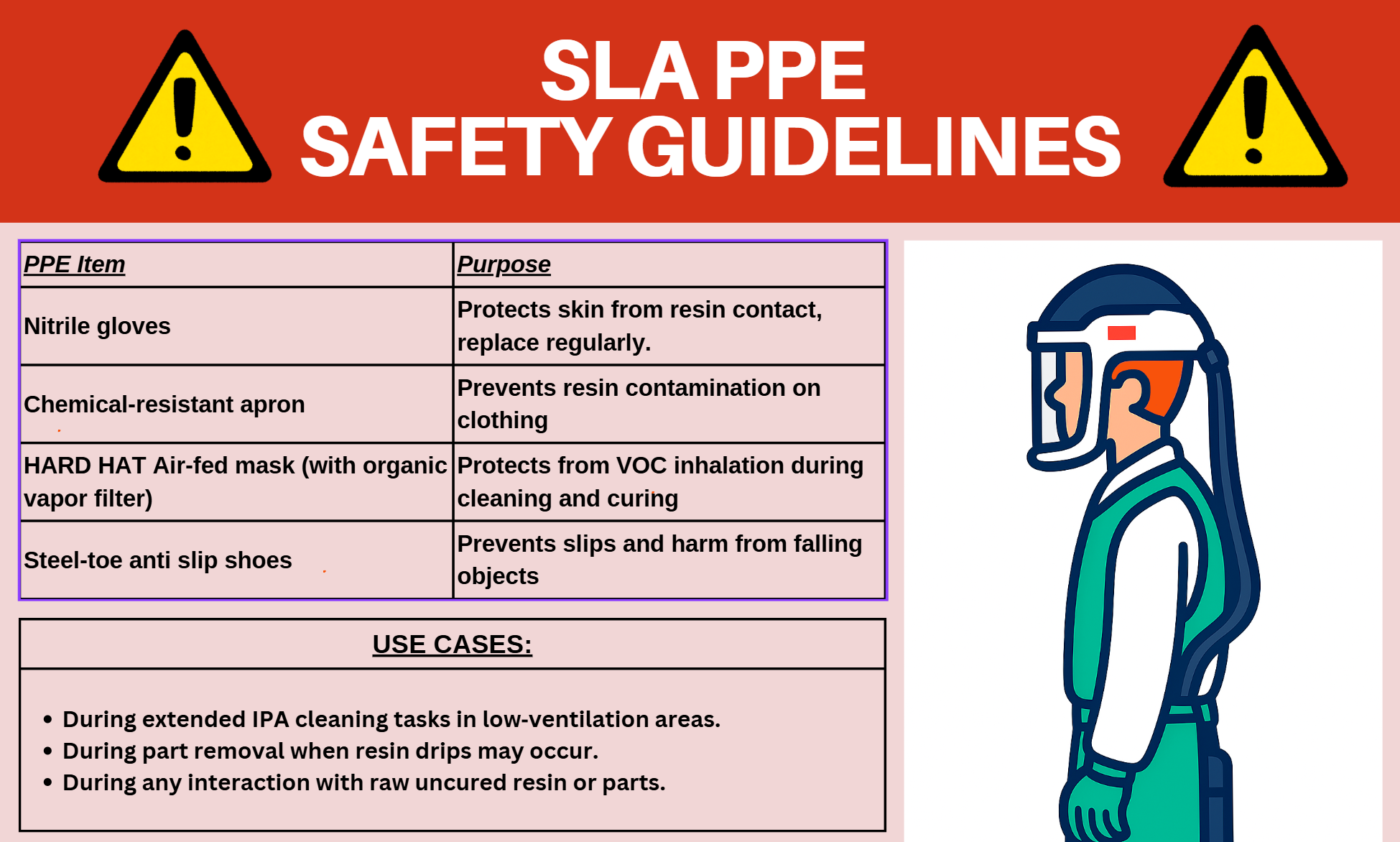
Depending on the material, process and risk assessment, respiratory protection can also be significantly more sophisticated than the basic masks commonly associated with hobby printing.
Systems such as the 3M Versaflo TR-600 powered air-purifying respirator (PAPR) can, when fitted with the appropriate cartridge and headtop for the identified hazard, provide protection against combinations of particulates and certain gases or organic vapours. 3M specifically offers organic-vapour and high-efficiency particulate filtration configurations within the TR-600 family.
Importantly, the TR-600 is a powered air-purifying respirator, not simply an “air-fed mask”, and the exact filter or cartridge matters. A particulate-only configuration cannot automatically be assumed to protect against organic vapours.
Likewise, buying any random respirator labelled “for chemicals” is not a substitute for selecting the correct protection.
The UK's Health and Safety Executive stresses that respiratory protective equipment needs to be matched to the wearer, task and environment, with the correct filter and protection factor selected for the contaminant involved. Tight-fitting respiratory protection also depends on achieving a proper facial seal.
This is where comparisons between industrial and hobby practice can become misleading.
A correctly selected and properly fitted reusable half-mask can be legitimate respiratory protection. A PAPR is not automatically required simply because resin is being used.
The bigger problem is that many hobbyists have never carried out the type of exposure assessment that would determine whether their ventilation and PPE are appropriate in the first place.
Ventilation Comes Before the Mask
Respirators should also not become an excuse to ignore the room itself.
In industrial health and safety, PPE is generally one of the later layers of exposure control.
For desktop resin printing, that means thinking about the entire process:
Where is the printer operating? Where do the emissions go? Where is resin poured? Where are parts washed? Where does contaminated IPA evaporate? Where are parts cured?
A small carbon filter fitted inside the printer may reduce some odour or contaminants, but it should not automatically be treated as a substitute for properly controlling emissions.
NIOSH recommends ventilation as a means of reducing exposure during desktop vat photopolymerisation and specifically notes that UV curing can also generate particles and gases that should not be inhaled.
Ideally, resin printing and post-processing should therefore happen in a dedicated, well-controlled workspace rather than a bedroom or normal occupied living area.
The exact controls required depend on the resin, the quantity being processed, frequency of use, room volume, ventilation and the manufacturer's Safety Data Sheet.
The important point is to start treating the process as chemical processing, not simply as owning another desktop printer.
The Real Revolution in Resin Printing
None of this should take away from how impressive modern desktop resin printing has become.
Quite the opposite.
Now, individual designers, engineering students, miniature makers, jewellery designers, small manufacturers and hobbyists can use technology that once needed an industrial service bureau and hundreds of thousands of pounds of equipment.
Parts with very small features can be made overnight on a machine that sits on a workbench.
Engineering-grade and specialist photopolymers are easier to get hold of.
Build volumes are growing.
Automation is getting better.
Machine prices keep falling.
This spread of manufacturing technology is a huge plus for engineering and product development.
But there is another side to it.
The accessibility of the machine has advanced much faster than the average user's understanding of the chemistry.
A £700 resin printer can look like consumer electronics.
The process taking place inside it is still vat photopolymerisation.
The liquid inside it is still reactive industrial chemistry.
And the same basic principles used within professional additive-manufacturing environments — understanding the SDS, controlling exposure, providing ventilation, protecting the skin, selecting appropriate PPE and safely handling contaminated waste — remain relevant regardless of how inexpensive the printer becomes.
That may ultimately be the most important lesson from the desktop resin-printing revolution.
We have successfully brought industrial additive manufacturing into the home.
Now we need to bring the industrial safety culture with it.
In factories and workshops, handling resin is usually part of a larger safety system.
There may be special resin areas, local exhaust ventilation, controlled wash stations, chemical storage, spill procedures, safety data sheets, training, waste-management rules and specified PPE.
Depending on the material, process and risk assessment, breathing protection can be far more advanced than the basic masks used for hobby printing.
Systems such as the 3M Versaflo TR-600 powered air-purifying respirator (PAPR) can, with the right cartridge and headtop for the hazard, guard against particulates and certain gases or organic vapours. 3M offers organic-vapour and high-efficiency particulate filter options within the TR-600 range.
Importantly, the TR-600 is a powered air-purifying respirator, not just an “air-fed mask”. The exact filter or cartridge matters. A particulate-only setup cannot be assumed to protect against organic vapours.
Likewise, buying any random respirator labelled “for chemicals” is not a substitute for choosing the correct protection.
The UK's Health and Safety Executive says that respiratory protective equipment must match the wearer, task and environment. You need the right filter and protection factor for the contaminant. Tight-fitting respirators also rely on a proper seal against the face.
This is where comparisons between industrial and hobby practice can become misleading.
A correctly selected and properly fitted reusable half-mask can be legitimate respiratory protection. A PAPR is not automatically required simply because resin is being used.
The bigger problem is that many hobbyists have never carried out the type of exposure assessment that would determine whether their ventilation and PPE are appropriate in the first place.
Ventilation Comes Before the Mask
Respirators should also not become an excuse to ignore the room itself.
In industrial health and safety, PPE is generally one of the later layers of exposure control.
For desktop resin printing, that means thinking about the entire process.
Where is the printer operating? Where do the emissions go? Where is resin poured? Where are parts washed? Where does contaminated IPA evaporate? Where are parts cured?
A small carbon filter fitted inside the printer may reduce some odour or contaminants, but it should not automatically be treated as a substitute for properly controlling emissions.
NIOSH recommends ventilation as a means of reducing exposure during desktop vat photopolymerisation and specifically notes that UV curing can also generate particles and gases that should not be inhaled.
Ideally, resin printing and post-processing should therefore happen in a dedicated, well-controlled workspace rather than a bedroom or normal occupied living area.
The exact controls required depend on the resin, the quantity being processed, frequency of use, room volume, ventilation and the manufacturer's Safety Data Sheet.
The important point is to start treating the process as chemical processing, not simply as owning another desktop printer.
The Real Revolution in Resin Printing
None of this should take away from how impressive modern desktop resin printing has become.
Quite the opposite.
We have reached a point where individual designers, engineering students, miniature makers, jewellery designers, small manufacturers and hobbyists can access manufacturing technology that would once have required an industrial service bureau and hundreds of thousands of pounds of equipment.
Parts with incredibly small features can now be produced overnight on a machine sitting on a workbench.
Engineering-grade and specialist photopolymers are becoming increasingly accessible.
Build volumes are increasing.
Automation is improving.
Machine prices continue to fall.
That democratisation of manufacturing technology is an enormous positive for engineering and product development.
But there is another side to it.
The accessibility of the machine has advanced much faster than the average user's understanding of the chemistry.
A £700 resin printer can look like consumer electronics.
The process taking place inside it is still vat photopolymerisation.
The liquid inside it is still reactive industrial chemistry.
And the same basic principles used within professional additive-manufacturing environments, understanding the SDS, controlling exposure, providing ventilation, protecting the skin, selecting appropriate PPE and safely handling contaminated waste, remain relevant regardless of how inexpensive the printer becomes.
That may ultimately be the most important lesson from the desktop resin-printing revolution.
We have successfully brought industrial additive manufacturing into the home.
Now we need to bring the industrial safety culture with it.
Copyright © 2026 Logical Branding. All rights reserved.
